
Buying property across borders is exciting—and tricky. Funding is often the hardest part. Lenders, documentation, currency rules, and residency status all shape what you can borrow and on what terms. The good news? If you’re purchasing in the United States, viable financing paths exist for non‑U.S. citizens and non‑residents. I’ll walk you through how they work, where the pitfalls hide, and how to stack the odds in your favor.
Why financing foreign real estate feels hard
- Bank appetites differ country to country. In many markets, mortgages are rare, short‑term, or expensive compared with the U.S.
- Residency matters. Some lenders limit loans to citizens or permanent residents, or they require local income, credit history, or tax filings.
- LTV and age rules vary. Expect higher down payments (30%–50%) and, in some countries, age‑based life‑insurance requirements tied to the loan.
- Currency and transfer controls. Getting funds out of your home country can be harder than qualifying for the property itself.
If you’re buying in the United States, though, you’ll find a broader menu of financing options than in most markets—provided you prepare well and choose the right lender or structure.
Snapshot: Can non‑U.S. buyers get a U.S. mortgage?
Yes. Many U.S. and international lenders offer programs for foreign nationals, non‑permanent residents, and expats. Terms are often more conservative than standard domestic loans—think bigger down payments and slightly higher rates—but they can be competitive if your documentation is clean and your credit/income story is clear.
Typical ranges you might see (actual terms depend on the lender and your profile):
- Down payment: 25%–50% (prime borrowers at 30% are common)
- Loan types: 30‑year fixed or adjustable (ARMs), interest‑only options in some cases
- Property types: Primary, second home, or investment (1–4 units); condos may have extra requirements
- Documentation: Foreign credit reports or bank reference letters, 12–24 months of asset/income statements, passport/visa, U.S. ITIN or SSN if available
Pro tip: If you lack a U.S. credit score, ask lenders whether they accept “non‑traditional” credit (utility, rent, international credit files) or use asset‑depletion underwriting.
Your main financing options in the United States
1) Bank or mortgage‑lender financing (foreign national programs)
This is often the most cost‑effective option when available.
What to expect:
- Higher equity: Plan for 30%–40% down on second‑home/investment purchases; potentially lower on primary occupancy with strong files.
- Income verification: Global income can count. Be ready with translated and notarized financials, CPA letters, and tax returns where applicable.
- Reserves: Lenders may require 12+ months of payments in liquid assets post‑closing.
- Closing timeline: 30–60 days, longer if sourcing funds internationally.
How to strengthen approval odds:
- Park down payment and reserves in a U.S. account 60–90 days before underwriting to clean the “source of funds” trail.
- Obtain an ITIN from the IRS if you don’t have an SSN; many lenders and title companies prefer it for reporting.
- Choose a property in markets with deep comparables and strong HOA/condo documentation—underwriting is friendlier.
Best for: Buyers seeking long amortizations, predictable payments, and potential tax deductibility of mortgage interest under U.S. rules (consult your tax advisor).
2) Developer financing (new builds and pre‑construction)
Some U.S. developers offer staged‑payment or carryback options, especially in new communities and condo projects.
Common structures:
- Milestone draws: 10% at contract, 10% at specified build stages, balance at completion
- Fixed schedule: Equal installments over 12–36 months, sometimes interest‑free during construction
- Bridge-to-perm: Developer or preferred lender finances construction, then converts to a conventional mortgage at delivery
Upsides:
- Streamlined paperwork; fewer age or insurance requirements
- Predictable cash‑flow planning aligned to construction
Trade‑offs:
- Usually short‑term and must be refinanced or paid at completion
- Limited negotiation if the project is selling quickly
Best for: Buyers who prefer staged cash deployment and plan to refinance into a long‑term loan at completion.
3) Seller financing (owner carry)
Individual sellers sometimes finance part of the purchase price.
Typical terms:
- Down payment: 20%–50%
- Amortization: Often interest‑only with a balloon in 3–5 years
- Security: Seller keeps a lien (deed of trust or mortgage) until payoff
Pros:
- Flexible underwriting—great if you lack U.S. credit
- Faster closings and potentially lower fees
Cons:
- Short maturities; you’ll likely need to refinance
- Interest rates can be higher than bank loans; negotiate prepayment rights
Best for: Unique properties, longer‑on‑market listings, or when you value speed and flexibility over the lowest rate.
Alternatives and creative structures
- Cross‑border private lenders: Asset‑based loans at lower LTVs, quick closes, higher rates/fees—use as bridges.
- Cash‑out refinancing of home‑country assets: Tap equity where you already bank; hedge currency exposure if needed.
- Partnerships or equity syndication: Share equity with investors; pair with bank debt to optimize leverage.
- Home‑country banks with U.S. branches: Some global banks lend to their existing international clients on U.S. property.
Costs to budget beyond the down payment
- Closing costs: 2%–5% of price (title insurance, escrow, lender fees, transfer taxes, recording)
- Reserves and escrows: Prepaid taxes/insurance; several months of HOA dues if required
- Foreign exchange and wires: Bank spreads, intermediary fees, anti‑fraud checks—plan timing and buffers
- Appraisal and inspections: Required by most lenders; additional condo or HOA reviews for investments
Legal and tax essentials for international buyers
- Title and property rights: The U.S. generally offers fee simple ownership with recorded deeds—close with a reputable title company/attorney.
- Entity planning: Many foreign investors buy via LLCs or trusts for liability, privacy, or estate planning. Coordinate with counsel in both countries.
- FIRPTA and withholding: Understand U.S. federal/state tax withholding when selling; rental income tax and treaty benefits if leasing.
- Insurance: Property, liability, and—for some lenders—life insurance; check lender requirements early.
I’m not your lawyer or tax advisor, so assemble a team: a cross‑border real‑estate attorney, a CPA familiar with your treaty country, and a lender experienced with foreign nationals.
Step‑by‑step: How I’d approach financing as a non‑U.S. buyer
- Define your goal: vacation home, rental, or mixed use; target cash flow and hold period.
- Choose 2–3 U.S. markets with strong fundamentals and landlord laws that fit your strategy.
- Pre‑qualify with lenders that actively serve foreign nationals; request term sheets before touring.
- Organize documents: passport/visa, proof of funds, income letters, translated statements, entity docs, and an ITIN application if needed.
- Move funds into a U.S. account early; line up FX hedging if your currency is volatile.
- Offer with financing contingencies aligned to your lender’s timelines; clarify condo/HOA review needs.
- Close through a title/escrow company; confirm vesting (personal vs LLC), insurance, and post‑closing reserves.
The bottom line
Financing foreign real estate can be done. In the U.S., foreign national mortgages, developer terms, and seller carrybacks give you real options. Enter with realistic down payment expectations, airtight documentation, and the right advisors, and you’ll find capital is available at terms that make sense.
About Luvanex Realty Group’s Foreign Investor Program
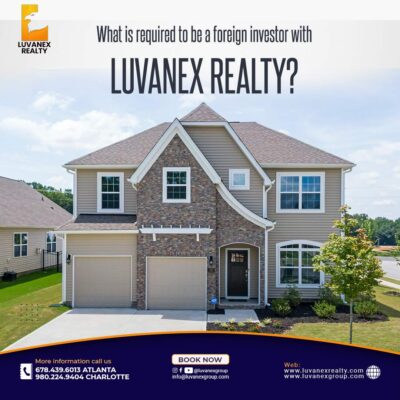
Luvanex Realty Group created the Foreign Investor Program to make U.S. property investing more accessible to international buyers across Africa, Asia, the Caribbean, and Latin America. We’ve supported clients from Nigeria, Ethiopia, South Africa, Kenya, Ghana, India, China, Jamaica, Colombia, and beyond—many of whom previously purchased all‑cash due to residency and credit hurdles. The program streamlines onboarding, lender matching, and closing in the Southeastern United States, helping investors transition from cash‑only to financed acquisitions.
Ready to explore financing pathways and suitable markets? Get in touch to start your pre‑qualification and market selection process today.
Get more information about our Foreign Investors Program started right away.